
Generative Engine Optimization (GEO) and AEO Services
Future-Proof Your Brand in the Age of AI Search Engine Optimization
Get Your GEO Audit
What Is Generative Engine Optimization (GEO)?
Generative Engine Optimization (GEO) is the practice of structuring your content, data, and digital presence so that AI engines like ChatGPT, Gemini, Claude, Perplexity, and Google’s AI Overviews cite and recommend your brand when they answer a question. Where SEO competes for a ranking, GEO competes to be inside the answer itself.
The New Standard for Digital Authority: GEO
Ensure your brand is cited, trusted, and recommended by the engines that now define reality.
The Problem: Being Found Isn’t Enough
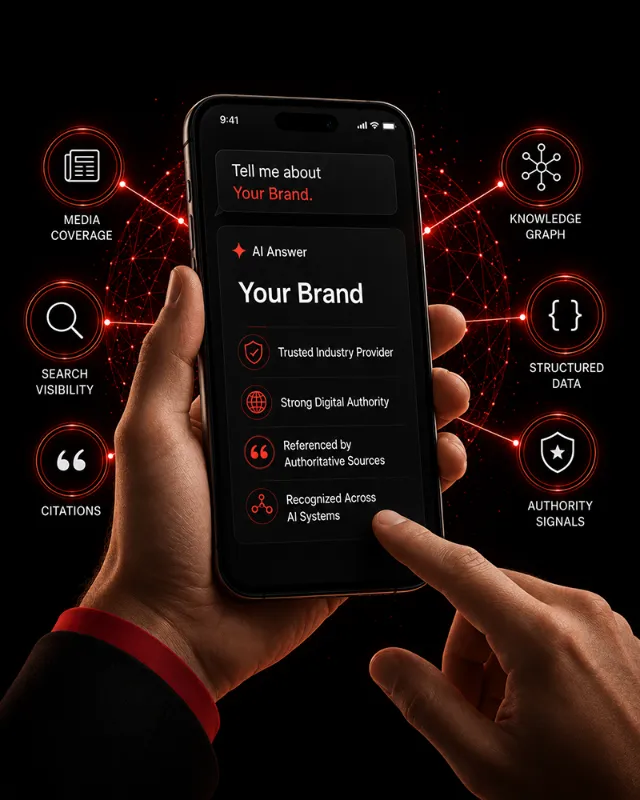
Search has evolved. Users are moving away from browsing lists of links and toward a world of definitive answers. Whether it’s called AEO (Answer Engine Optimization), AIO, or SEO 2.0, the goal is the same- your brand must be the primary source for AI engines. If you aren’t being synthesized into the final answer, you are invisible to the modern consumer.
The Reality: AI Engines are the New Gatekeepers
From ChatGPT and Gemini to Perplexity and Claude, AI engines don’t just “list” your information, they judge it. They research, summarize, and deliver a single, confident response. Whatever these models say about your brand becomes the “truth” in the user’s mind.
If your brand isn’t part of that synthesized answer, you’re losing the most critical touchpoint in the customer journey.
The Solution: Mastering the Generative Landscape
At Buzz Dealer, we’ve spent 15+ years engineering digital perception. We apply that deep expertise to Generative Engine Optimization (GEO), ensuring your brand is the authoritative source that AI models rely on.
We go beyond traditional keywords to focus on algorithmic trust. We ensure that when AI engines are asked about your industry, they speak about your brand accurately, positively, and with total clarity.
Don’t just rank. Be the answer!
What We Offer
✅ AI Visibility & Presence Audit
We analyze how your brand appears across AI-generated platforms like ChatGPT, Gemini, Copilot, Grok, Claude, and Perplexity. We evaluate tone, factual accuracy, and authority signals.
✅ Structured Data Optimization
We implement rich schema markup (e.g., FAQs, reviews, org info) that AI engines rely on to extract structured, citable facts.
✅ Content Alignment for AI
We update and optimize your digital content to align with how AI engines source and contextualize information.
✅ Direct Model Engagement
Where possible, we shape how AI systems interpret your brand by guiding structured inputs, citation ecosystems, and prompt engineering.
✅ Real-Time Monitoring & Adjustments
We continuously monitor how AI engines portray your brand and respond rapidly to misinformation or reputational risks.
The GEO-First Framework:
Discoverability, Sentiment & Authority
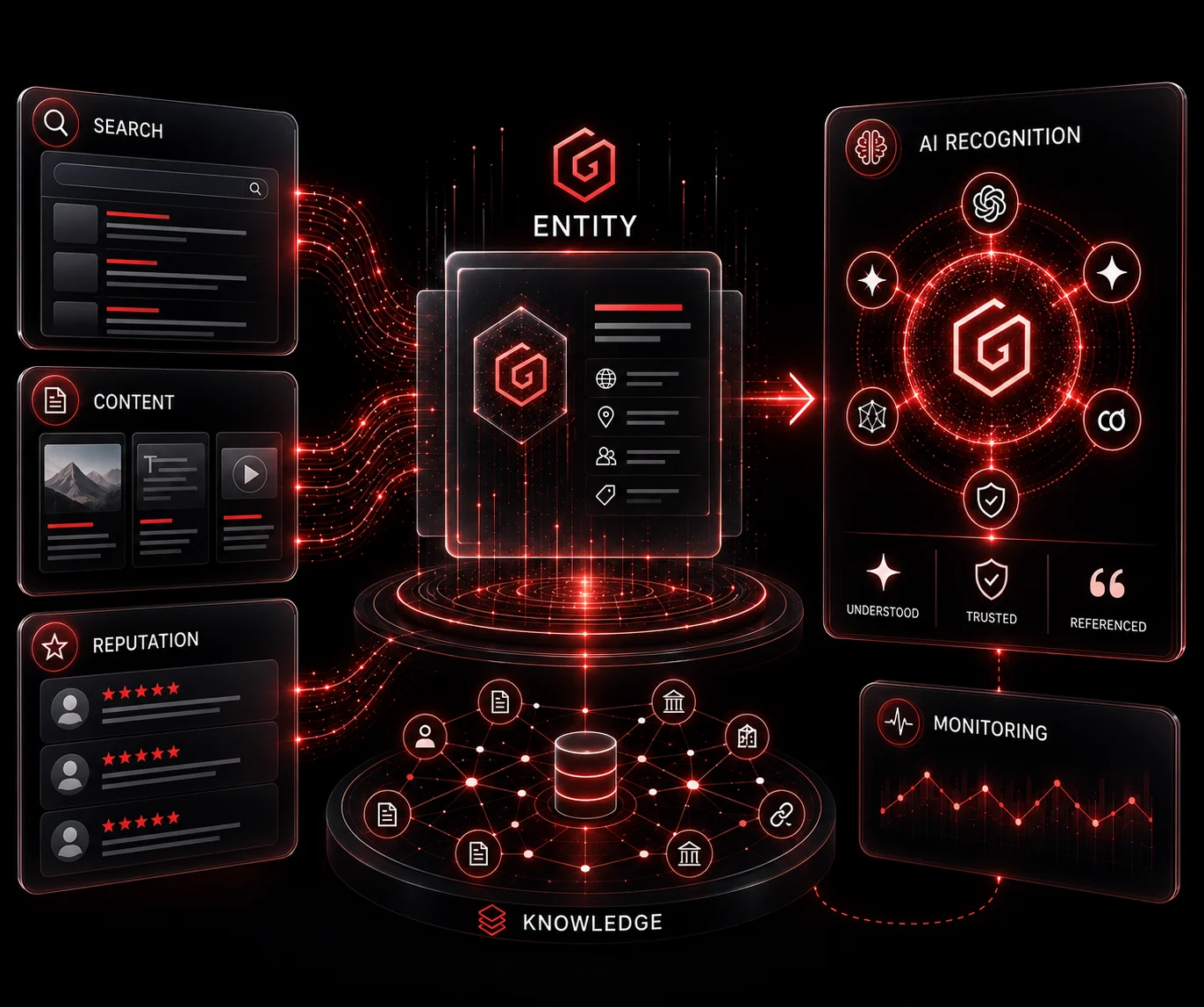
Our work is built on the GEO-First Framework: three pillars that decide whether AI engines find you, trust you, and recommend you.

Discoverability
Discoverability is the foundation. Before any content or campaign, AI systems need to recognise your brand as a coherent entity, with a consistent name, category, and credentials across your site, knowledge panels, industry databases, and the platforms AI crawls. We align those signals so generative systems can explain what you do without guessing, and include you when they summarise your category.
Learn more →
Sentiment
Sentiment is where many brands are caught off guard, assuming that being included means being endorsed. AI engines can mention you and still hedge with qualifiers, outdated details, or subtle negativity. We monitor how the major models describe you, correct sentiment drift as it appears, and build the accurate, positive signals that make an AI recommend you confidently rather than cautiously. The sentiment layer is a service in its own right: see our AI reputation management services.
Learn more →
Authority
Authority is the layer that makes the other two durable. AI systems weight sources by trust, so we build digital authority through high-quality third-party coverage, entity corroboration, and the citations that models treat as reliable, including Wikipedia and Wikidata. Every authoritative placement feeds the signals AI uses to decide whose answer to trust, moving a brand from merely visible to actually recommended.
Learn more →Our Process: Step-by-Step Flow

AI Presence Audit
We test how the major AI engines (ChatGPT, Gemini, Claude, Perplexity, Copilot) currently describe your brand across your most important queries, recording what they say, which sources they cite, and where you are absent, misrepresented, or under-credited. This becomes your GEO baseline and a prioritised list of gaps to close. To run the same check yourself, see how to track your brand in AI Overviews.

Structured Tagging
We implement the structured data AI engines rely on to extract facts confidently: organisation, FAQ, product, and entity schema, plus the passage-level structure that lets models lift clean answers from your pages. This makes your content legible to machines, not only readable to people.

Content Refresh
We restructure and update key pages into direct, question-and-answer formats with clear, citable passages, and align your messaging across every surface so the story an AI assembles about you is consistent and current.

Model Engagement
We strengthen the external signals that shape AI answers: authoritative third-party coverage, entity corroboration, and the citation ecosystems that give models more trusted places to see your brand. Where possible, we guide how systems interpret your brand through structured inputs.

AI Monitoring
We re-test your priority queries every month across the major engines, track how mentions, sentiment, and citations move, and respond quickly to drift or misinformation. GEO is an ongoing position to hold, so monitoring and adjustment are continuous.
Building the Right Assets
We deploy targeted strategies for AI readiness:

 Rich schema markupOrganisation, FAQ, and product markup that lets AI extract citable facts.
 Real-time content updatesKeeping pages current so AI never relies on stale information about you.
 Authority-building signalsThird-party coverage and citations that AI engines treat as trust.
 Direct model engagementStructured inputs that guide how systems interpret your brand.
 Surveillance of AI outputsContinuous monitoring of what each engine says about you.
 Review source optimizationAligning the review platforms that feed AI sentiment.
 Entity optimizationA clean, consistent entity so models recognise you without guessing.
GEO vs SEO: What’s the Difference?
SEO competes for a ranking. GEO competes to be inside the answer. Here’s how they compare across the dimensions that matter.
| Dimension | Traditional SEO | GEO |
|---|---|---|
| Focus | Ranking your pages in the search results | Being cited inside the AI-generated answer |
| Surface | Google & Bing results pages | ChatGPT, Gemini, Claude, Perplexity, Copilot, AI Overviews |
| Core signal | Keywords, backlinks, site structure, page speed | Passage structure, entity clarity, schema, digital PR |
| Content format | Keyword-optimised pages | Direct question-and-answer passages models can lift |
| Measurement | Rankings, clicks, organic traffic | AI citations and brand mentions across engines |
| Starting point | Technical and on-page optimisation | A solid SEO foundation, then entity, schema & PR |
GEO for Regulated and High-Stakes Industries
GEO matters most where trust is scrutinised and a wrong AI answer is expensive. Our programs are tuned to the trust signals each of these categories depends on:
Fintech & financial services
Where compliance, accuracy, and investor perception ride on how AI describes you, we build the corroborated, regulation-aware signals models trust.
Forex & CFD brokers
A category where AI answers are often shaped by complaint sites and outdated reviews, so we correct sentiment and build authoritative coverage to balance them.
Crypto & Web3
Fast-moving and reputation-sensitive, where entity clarity and credible third-party sources separate serious projects from noise.
Regulated & healthcare
Where E-E-A-T and factual accuracy are non-negotiable, and AI engines weight authoritative, well-sourced information most heavily.
GEO in Action
Category visibility: from absent to cited
A medical aesthetics brand was effectively invisible in AI answers for its core category, while competitors were being named. Over five months, we aligned its entity, restructured key pages for extraction, and built authoritative coverage. By the end of the third month, the brand was appearing in over 20% of tracked queries across ChatGPT, Gemini, and Perplexity for its priority topics, and that share kept climbing.
Sentiment correction
A B2B fintech company was being mentioned by AI engines, but with outdated information that undercut it against newer competitors. We monitored the drift, corrected the underlying sources, and built positive corroborating signals. Within three months, AI engines were accurately presenting the company as a viable alternative and ranking it among the top three options in its category.
Diligence-stage authority
Ahead of a funding round, a personal health brand needed AI engines to describe it accurately and authoritatively for investor and partner research. We built the entity, schema, and third-party authority signals. Within four months, AI answers clearly presented the people behind the brand, the latest research data, and testimonials from beta testers.
See how you show up across AI and search
Enter your brand and website to generate an automated Brand Visibility & Reputation Audit. It measures how clearly your brand is understood, discovered, and trusted across search and AI, including sentiment, discoverability, and authority.
Get a free brand audit.
Why Buzz Dealer
With 15+ years engineering digital perception, a Forbes Council seat among its leadership, and placements in tier-1 media, Buzz Dealer brings deep SEO, ORM, and Digital PR expertise to GEO.

Decades of SEO & ORM authority
Now evolved for AI dominance
Full-spectrum expertise
From schema and AI training data to content optimization

Global reach
Multilingual support across AI engines

Reputation-first
We don’t just optimize - we protect and elevate your brand
Featured In
Buzz Dealer’s work and GEO framework have been covered across industry and tier-1 media.




Check out additional items on our In The Press page
Hear From Our Clients
FAQs About Our AI Optimization Services
What’s the difference between GEO and SEO?
Traditional SEO focuses on ranking your website in search engines like Google and Bing, while Generative Engine Optimization (GEO) focuses on whether AI engines like ChatGPT, Gemini, Claude, Perplexity, Copilot and others cite your brand when answering user questions. SEO keeps you visible in result pages; GEO determines if you are actually mentioned inside the AI-generated answer. The distinction matters because user behavior is shifting. Instead of clicking through ten blue links, people ask AI assistants one question and read a single synthesized response. If your brand is not cited or mentioned in that answer, it effectively disappears from consideration, even if you still rank in classic search results. SEO emphasizes keywords, backlinks, site structure, and page speed so that traditional search engines rank your pages higher. GEO emphasizes passage-level structure, direct Q&A formatting, entity clarity, and schema markup, plus digital PR, so AI systems can easily understand who you are and feel confident quoting you as a source.
How do AI systems decide which websites to cite?
AI engines prioritize sources based on authority signals, content clarity, and trust indicators such as E-E-A-T (Experience, Expertise, Authoritativeness, Trustworthiness). Authority signals include domain strength, high-quality backlinks, and recognition from reputable sites like major news outlets, industry publications, or Wikipedia. Content clarity means your pages answer specific questions directly, in language that’s easy for models like Gemini, Claude, ChatGPT and others to parse and quote. Trust indicators include transparent author information, verifiable claims with external citations, consistent company descriptions across your site and third-party sources, and in regulated industries, clear regulatory and compliance information. GEO focuses on deliberately strengthening all three so AI systems feel comfortable presenting your content as ‘the answer’.
How can my website appear in ChatGPT or Gemini answers?
Your website is more likely to be cited when it already ranks well in traditional search, is structured in clear Q&A or passage format, and is supported by third-party coverage that AI engines already trust. Start with solid SEO so Google and Bing recognize your pages as relevant for important queries. Then restructure key pages into question-and-answer segments, add FAQ and Organization schema, and make sure your brand and products are defined in simple, explicit language that models like ChatGPT, Gemini, Claude, Perplexity and others can extract. Finally, support this with digital PR: being mentioned on respected industry sites, news outlets, or reference sources gives AI engines more places to ‘see’ your brand and more confidence when including you in synthesized responses.
What type of content does AI cite most frequently?
AI engines most often cite: clearly labeled Q&A sections, concise passages that answer one question very directly, and third-party coverage such as news articles, industry features, and high-authority reference pages. The Q&A format is powerful because it mirrors how people talk to AI: a question at the top, followed by a short, direct answer. Models can easily lift that pair into responses, well-structured passages and short paragraphs that fully answer ‘one idea at a time’ which are the second most common pattern. Third-party coverage matters because it isn’t written by you. Articles on trusted media sites, niche industry portals, or reference sources like Wikipedia carry more weight than your own blog when AI engines decide who to quote. GEO combines these formats so your owned content and your secured press coverage reinforce each other.
How do I measure whether my GEO strategy is working?
Measure GEO by tracking AI citations over time: which queries trigger mentions of your brand in AI answers, which sources are being cited, and how that correlates with qualified traffic and leads. Practically, you maintain a test set of 20–50 high-intent questions. Once a month, you run them in several assistants such as ChatGPT, Gemini, Claude, Perplexity, Copilot and others, and record: what the AI says, whether your brand appears, and which URLs it references. Layer analytics on top of this: watch for traffic and leads coming from pages that you know are frequently cited by AI (often the same pages that rank well in Google). A healthy GEO program shows a rising percentage of tracked queries that mention your brand, plus compounding traffic and pipeline impact from those pages.
How do I audit my current visibility in AI search engines?
Start a GEO audit by testing your brand name, product names, and 10-20 high-intent keywords directly in ChatGPT, Gemini, and Perplexity, then documenting what these systems say, which sources they cite, and whether your website appears at all. Create a spreadsheet with columns for: query, AI engine (ChatGPT, Gemini, Claude, Perplexity, Copilot, etc.), summary text, brands mentioned, sources cited, and whether your site appears. Run your key queries across at least three different engines so you see patterns, not just one model’s behavior. This becomes your GEO baseline. Anywhere you are absent, misrepresented, or under-credited points directly to content, schema, PR, or reputation gaps. The GEO strategy then focuses on closing those gaps and re-testing the same prompts every month to see if mentions and citations move in the right direction.
How do I choose the right GEO agency or specialist?
When selecting a GEO specialist, prioritize agencies that demonstrate verifiable AI citation outcomes, not just traditional SEO rankings. Core criteria should include documented placements inside ChatGPT or Perplexity for client queries, dedicated GEO practitioners (rather than repurposed SEO teams), deep understanding of passage-level optimization and schema markup, and transparent reporting that tracks citations at the keyword level.
According to Buzz Dealer’s GEO audits across brands in finance, SaaS, and B2B services, agencies that rely purely on backlink building rarely achieve consistent AI attribution. Successful programs combine structured Q&A content, authoritative source development, and systematic citation testing across multiple AI platforms.
Practical evaluation questions include: Which client queries currently trigger AI citations? How do you measure extraction success beyond traffic? What percentage of clients appear in generative answers within six months? Can you show live examples inside Perplexity or Gemini? Agencies unable to provide direct AI evidence typically lack real GEO capability.
What timeline and progress should I expect from professional GEO services?
Professional GEO programs follow staged progress: months one and two focus on technical restructuring, schema implementation, and passage-level content refinement. By month three, brands with existing Google visibility usually begin seeing initial AI citations for branded or low-competition queries. Months four through six expand coverage into commercial long-tail searches, with broader attribution emerging between months six and twelve depending on category competitiveness.
Based on Buzz Dealer benchmarks, companies already ranking on Google’s page one often achieve first AI mentions within 30 to 60 days after optimization, while lower-authority domains require longer compounding cycles.
Agencies should provide monthly citation testing across ChatGPT, Perplexity, and Google AI Overviews, showing which queries surface your content and which do not. Ask for keyword-level attribution reports, historical client timelines, and clear explanations of how strategy evolves when citations stall. GEO without transparent measurement is indistinguishable from experimental SEO.
What is the difference between GEO and AIO?
GEO (Generative Engine Optimization) focuses on how AI engines like ChatGPT, Gemini, Claude and others cite, mention, and recommend your brand in their answers. AIO (AI Optimization) has two meanings: (1) optimizing internal workflows for AI content creation, or (2) an alternative term for GEO itself.
AIO is often used by content tools to mean faster, cheaper writing through better prompts, templates and AI drafting. This improves how you make content, but does not guarantee that AI engines will actually reference it.
AIO is also increasingly used as a synonym for GEO, meaning “optimizing content so AI search and assistant systems discover and cite it.” The key test is whether a provider can show your brand appearing in real AI answers. If they focus only on internal efficiency without citation tracking, they are doing workflow AIO, not GEO.
Both matter, but they are different tools. Workflow AIO helps you produce more content. GEO ensures your content actually reaches people through AI recommendations and citations.
What other terms are used for GEO?
GEO is sometimes described with other labels such as AI Search Optimization, LLM Optimization (LLMO), AEO (Answer Engine Optimization), AI SEO, AI Visibility, AI Citation Optimization, and SEO 2.0, but they all point to the same core idea: influencing how AI systems surface and describe your brand.
- AI SEO and LLM SEO appear in tool and agency marketing as shorthand for optimizing content for large language models.
- LLMO (Large Language Model Optimization) and AEO (Answer Engine Optimization) emphasize targeting AI assistants and answer‑focused search.
- SEO 2.0 describes the evolution from traditional rankings to AI citation and generative visibility.
- AI search optimization and AI visibility highlight AI assistants and enhanced search results as major discovery channels.
At Buzz Dealer, “GEO” is the umbrella term for this discipline, but the work spans content, structured data, digital PR, and reputation so that assistants like ChatGPT, Gemini, Claude, Perplexity, Copilot and others treat you as a credible answer source.
What does “GEO-first” mean in practice?
“GEO-first” means prioritizing Generative Engine Optimization as your main organic growth strategy because it naturally incorporates and optimizes all other organic channels: the on-page elements of SEO (with AI-specific modifications), off-page SEO (external links), reputation management (positive sentiment), and digital PR (brand mentions, storytelling, authority building).
In practical terms, you start by auditing what AI engines like ChatGPT, Gemini, Claude, Perplexity and others say about your brand and which questions they answer with competitors. This reveals gaps in content, authority, sentiment, and coverage across all channels.
Instead of running separate SEO, ORM, and digital PR programs that overlap or conflict, a GEO-first approach plans everything together:
- Content is structured for both Google rankings and AI extraction
- Digital PR builds links, mentions, and authority signals that help both SEO and AI citations
- Reputation ensures positive sentiment so AI summaries feel trustworthy
- Technical SEO and schema support all of the above
The result is that improving GEO automatically strengthens SEO, reputation, and PR. Running those channels separately often leaves gaps: pure SEO ignores reputation and has limited AI impact, ORM only fixes brand sentiment, and digital PR alone misses technical optimization. GEO-first covers all organic bases in one coordinated system.
Why this matters: Traditional SEO alone won’t make you appear in AI answers. ORM alone won’t build rankings or citations. Digital PR alone won’t optimize your site for extraction. GEO-first does all three simultaneously.
Why hire Buzz Dealer for GEO instead of a typical SEO agency?
Buzz Dealer runs GEO as a dedicated discipline that includes advanced SEO (content restructuring, schema engineering), digital PR, and online reputation management to systematically increase how often AI assistants reference your brand.
Classic SEO agencies usually optimize for Google rankings only. Buzz Dealer starts by testing your queries across multiple assistants such as ChatGPT, Gemini, Claude, Perplexity, Copilot and others, then maps which sources and entities those models already trust. From there, we design content, technical SEO, PR, and reputation work specifically to secure citations in that ecosystem, not just more blue link placements.
Because Buzz Dealer also specializes in ORM and PR for fintech, real estate, and healthcare, your GEO program is built with the right trust, compliance, and authority signals for those sensitive industries. The result is not just higher rankings, but more frequent, more accurate mentions inside the AI answers your prospects, investors, and partners actually read.