Online Reputation Management Services
Control the Information People See When Searching for Your Brand Online
Get in Touch
What Is Online Reputation Management?
Online reputation management (ORM) is the practice of shaping what customers, partners, investors, and AI engines find and conclude when they research a company. It combines search-result management, review and sentiment management, third-party media, structured data, and continuous monitoring of how both Google and AI engines describe the brand. For a company, that picture directly affects sales, partnerships, hiring, and investment, and in the AI era a single synthesised answer can shape all of them before a buyer ever reaches your website.
Costs vary by severity and industry. Here is a full breakdown of what online reputation management costs in 2026.
Get The Online Recognition That You Deserve
Try searching for your brand on Google, like a potential customer or partner would do.
What do you see? Are you happy with the results? If not, your brand most likely needs online reputation management...
With professional ORM, you'll be able to:
- Have information about your brand correctly presented online
- Build authority and trust in your industry
- Have more positive reviews about your brand showing online
- Have negative and counterproductive information become less visible
- Build better online visibility for your brand
- Get the attention that your brand deserves
How We Work Our Magic
With Creative and Innovative Approaches to Deliver Solutions For Every Challenge
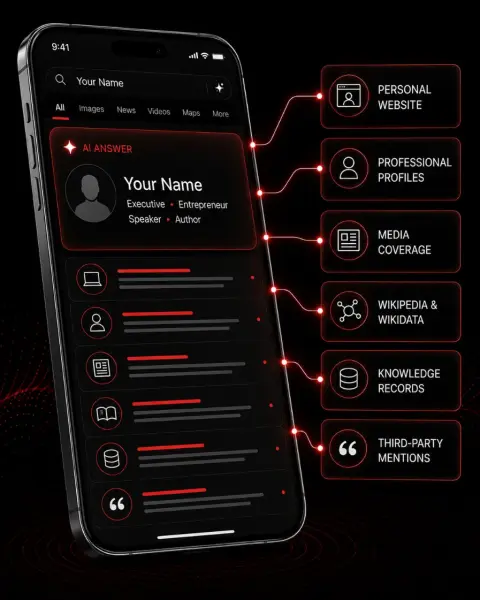
Building Online Presence
The complete process, from the technical adjustment (or development) of your brand's website, to listing on all relevant platforms, using structured data to properly present your information.
Spreading the
News
Writing and submitting press releases, news articles covering your brand, industry spotlight articles, guest posts on relevant blogs, interviews and other brand-mentioning content.
Optimizing Digital Assets
Taking care of your social media pages, web 2.0 profiles and online database listings, to ensure proper indexing, optimized visibility and an aligned brand message.
Handling Online Reviews
Choosing the right user-generated review (UGR) platforms, managing the brand's UGR profiles, encouraging positive reviews and handling the removal of fake ones.
Our Process

Analyzing the current status
We map how your brand currently appears across Google and the major AI engines: what ranks, what is said, which sources are cited, and where reviews, articles, or outdated information are working against you. You receive a clear baseline and a prioritised list of risks and opportunities.

Developing the right strategy
From the baseline we build a plan matched to your goals, industry, and risk profile, defining target outcomes, the assets we will build, the platforms and publications we will engage, and the metrics we will report against.

Setting the foundations
We establish the controlled assets that anchor your reputation: an accurate, well-structured website, verified profiles, structured data, and clean entity records, so that both search and AI engines can identify and describe your brand correctly.
Spreading content and coverage
We expand your authority through credible third-party coverage and content: press releases, industry articles, guest posts, and interviews that corroborate your brand and displace weaker or negative results. Where a result can be taken down rather than outranked, we do that first; see how to remove unwanted results from Google.

Optimization & Monitoring
We optimise for durability and keep watch: refining search results and structured data, managing reviews, and tracking how the major AI engines describe your brand, responding as the web and the models shift. Reputation is not static, so neither is the work. That last part has its own page: AI reputation management for brands.
Building Your Online Presence

- Corporate Websites: the technical foundation, structured so search and AI engines read your brand correctly.
- Social Networks: active, aligned profiles that reinforce a single, consistent brand message.
- Positive Media: earned coverage and articles that build authority and balance the record.
- Structured Data: schema that helps engines identify and describe your brand accurately.
- WEB 2.0 Profiles: supporting properties that strengthen indexing and visibility.
- Content Development: owned content that demonstrates expertise and feeds both search and AI.
Industries We Serve
Reputation risk looks different in every industry, so our reputation programs are built around the dynamics of yours.
Professional
services
For professional-services firms, credibility is the offering. We build the thought-leadership, accurate profiles, and review standing that make a firm the trusted choice, and we manage the sensitive situations these brands are exposed to.
SaaS & online
services
For SaaS and online-service brands, buyers research on G2, Capterra, and review sites long before a demo, and AI engines summarise that research into a verdict. We manage category perception, review standing, and the entity signals that decide how your product is described.
Technology &
startups
Technology companies and startups are judged on credibility and momentum, often before they have much of a track record. We build the authoritative coverage, accurate entity, and consistent narrative that make a young brand look as established as it is ambitious, and that hold up under investor and partner due diligence.
Gaming &
casino
Gaming and casino brands operate in a high-scrutiny, trust-sensitive space where licensing, payouts, and fairness questions dominate search and AI answers. We manage the review platforms and forums where players gather, surface accurate licensing and standing, and build the credible coverage that counters complaint-driven narratives.
Healthcare &
medical
Patient trust, accuracy, and compliance intersect here, and a single misleading review or outdated claim can carry real consequences. We manage patient-review platforms, correct inaccurate information, and build the authoritative, compliant content that both patients and AI engines rely on.
For founder and executive reputation, see Personal Reputation Management and our guide to CEO reputation management. For fintech and financial services, see ORM for Financial Brands.
Proactive and Crisis Reputation Management
Online reputation management works in two modes, and a strong program usually needs both. Proactive ORM builds the authoritative content, reviews, and entity signals that make a brand resilient before anything goes wrong, so that when a buyer, partner, or AI engine researches you, the dominant picture is accurate and positive. Crisis ORM responds when a damaging story, a wave of negative reviews, or a harmful association threatens the brand, moving quickly to contain the narrative, correct the record, and displace harmful results across both search and AI answers. For a situation that is unfolding right now, see Reputation ER: a free triage call within one working day and a plan for the first 72 hours. We do both, and we build the proactive foundation precisely so that any future crisis has less room to take hold. When the damage is already done and the search results show it, that work is our online reputation repair service.
Did You Know
93% of consumers read online reviews before trusting a business
42% trust online reviews as much as a personal recommendation
~69% of Google clicks go to the top three results
1B+ people now see Google's AI-generated answers
Corporate ORM in Action
4 months to AI vendor-list visibility
Healthcare: B2B medical & dental solutions
A B2B company providing solutions to dental and medical-aesthetics clinics wanted to become better known among clinic owners and decision-makers. We ran a continuous program of analysis, content creation and publishing, technical work, and ongoing monitoring. The company became significantly more recognised across its target audience, amplifying the range of B2B services it offers and generating consistent positive feedback from the businesses it works with.
Professional services: workplace health & safety authority
A workplace health and safety consultancy set out to raise its profile and establish itself as the authority in its field. Through a long-term program of SEO, content development, and digital PR, we built a durable online presence around its expertise. The firm became one of the best-known names in the workplace-safety sector in its market, a position it has maintained through sustained visibility.
Technology: visibility in AI-driven discovery
A technology-focused training company was not appearing when decision-makers asked AI tools like ChatGPT and Perplexity for vendor recommendations, which was costing it qualified leads. We rebuilt its authority for AI-driven discovery with earned media in enterprise-technology publications, structured citation-friendly content, and continuous monitoring of how AI systems described it. Within four months it was appearing consistently in AI-generated vendor lists, inbound demo requests rose substantially, lead quality improved, and the sales cycle shortened by roughly three weeks.
Why Buzz Dealer
Buzz Dealer has run online reputation programs for 15+ years, across 300+ ORM projects and 6,000+ published articles. We combine in-house media outreach and guaranteed placements with entity and AI-signal optimisation, so a brand's search results, reviews, third-party coverage, and AI descriptions are managed together rather than in isolation. Because we also run GEO, Digital PR, and Wikipedia management under one roof, we handle the situations that go beyond standard ORM: compliance-sensitive narratives, investor scrutiny, executive visibility, and differentiating a brand in a crowded market.



FAQs About Our Online Reputation Management Services
How has AI fundamentally changed online reputation management?
Before AI, negative reviews and articles might sit on page 2 or 3 of Google where most people never looked. Now, AI systems synthesize all available information about your brand, positive and negative, into summaries shown directly to prospects, investors, and customers. Your reputation is no longer just what appears on page one of Google; it's what AI engines like ChatGPT, Gemini, Claude, Perplexity, Copilot and others say about you in their answers.
This shift is profound. Traditional ORM focused on managing search visibility. AI changes everything because AI systems don't rank content, they synthesize it. An AI-generated answer pulls from news, reviews, social media, regulatory databases, and forums. If you have negative reviews or unfavorable articles, AI will access and include this information in its synthesis about your brand.
What's the best way to respond to negative reviews or complaints?
Respond quickly after first investigating the specific situation: acknowledge what they experienced, apologize for any frustration, explain what you found and what has been done, and invite private follow-up. This demonstrates honest problem-solving, not defensive deflection, which AI systems recognize as credible.
The emotional response is usually defensive, which backfires. In AI search, systems analyze not just what you said but how you said it. A pattern of angry or dismissive replies suggests you are trying to win arguments, not solve problems.
Examples:
- If you cannot verify the case: "Thank you for your feedback. We couldn't locate your account in our system. Please email support@yourcompany.com with your details so we can investigate and make this right."
- If it is a genuine issue: "Thank you for bringing this to our attention. We apologize for the frustration. Here is what we found happened, what we have changed, and how you can reach us directly to ensure everything is resolved."
When dozens of responses follow this pattern, AI systems like ChatGPT, Gemini, Claude, Perplexity and others see a consistent record of responsibility and improvement.
How do I optimize my corporate reputation specifically for AI search?
Optimize your corporate reputation for AI by ensuring review responses are professional and consistent, negative reviews are minimized and contextualized, and overall sentiment signals are positive across review platforms, news, and forums that AI engines monitor.
AI systems like ChatGPT, Gemini, Claude, Perplexity, Copilot and others synthesize reputation from multiple sources, especially reviews, complaints, and public sentiment. A pattern of unresolved negative feedback or defensive responses creates poor AI summaries.
Key steps:
- Review management: Respond to every review professionally. Investigate genuine complaints, fix issues, and show improvement. For unverified cases, invite private contact without accusing the reviewer.
- Sentiment monitoring: Track what appears when AI engines are asked about your brand. If negative patterns emerge, address the root causes.
- Contextual coverage: Earn media that shows you handling feedback well and improving over time. This balances any past negatives.
- Consistency: Ensure company descriptions and leadership details align across your site and profiles so AI can present a coherent, trustworthy picture.
When AI engines scan your reputation signals, they should see a company that listens, responds well, and shows a track record of positive resolution.
Is it possible to remove negative articles, reviews, or complaints from the internet?
Full removal is usually rare and difficult. More realistic approaches are: (1) resolving genuine issues with customers so they update their reviews positively, (2) reporting fake or policy-violating content for platform removal, (3) requesting factual corrections for inaccurate articles, and (4) actively encouraging more positive reviews and testimonials from satisfied customers across multiple platforms.
For genuine negative reviews:
- Investigate the specific case quickly
- Resolve the issue and ask the customer if they would update their review
- Follow up professionally to show you care about improvement
For fake or policy-violating content:
- Platforms may remove defamatory, doxxing, threatening, or spam content that clearly violates their policies
- Report with evidence; success rate is around 25 to 40 percent depending on the platform
For inaccurate articles:
- Contact the author or editor with documentation of errors
- Request specific corrections rather than wholesale removal
The strongest long-term strategy:
- Encourage happy customers to leave positive reviews on multiple platforms (Google, Trustpilot, industry sites)
- Collect video testimonials, case studies, and user stories
- Partner with influencers or satisfied customers for authentic review content
- Build a pattern of overwhelmingly positive user feedback so AI engines like ChatGPT, Gemini, Claude, Perplexity and others reflect your true customer experience
Over time, when AI systems synthesize your reputation, they see many more positive voices than negative ones. This creates balanced, favorable summaries rather than letting isolated complaints define you.
What comprehensive ORM programs include for enterprise companies?
Comprehensive ORM for enterprises typically combines: continuous monitoring, content and thought-leadership creation, digital PR for third-party validation, and structured review management across key platforms.
Monitoring now has to cover more than mentions on Google and social networks. It should also regularly check how AI assistants summarize you and which sources they cite. Content and thought leadership give you owned material that demonstrates expertise and can be used by both journalists and AI models.
Digital PR and media outreach add independent voices to your story. Structured review management ensures that feedback on major platforms is being collected, answered, and learned from so that both humans and AI engines see a consistent pattern of responsiveness and improvement.
What measurable outcomes should I expect from professional corporate ORM programs?
Professional corporate ORM builds your online presence so your brand is correctly presented, authoritative, and trusted across search engines, AI systems, reviews, and media.
What you get:
- Information about your brand correctly presented online (website optimization, structured data, listings)
- Authority and trust through industry coverage, positive media, and content development
- More positive reviews showing online (UGR management, encouraging genuine feedback)
- Negative and counterproductive information becomes less visible
- Better online visibility through SEO, social networks, and web 2.0 profiles
How it works:
- Analyze current status and develop strategy
- Build foundations (websites, profiles, structured data)
- Spread news (press releases, guest posts, interviews)
- Optimize digital assets and handle reviews
- Use SEO to enhance overall visibility
Expected timeline:
- Months 1-3: Optimized website, profiles, and initial content coverage
- Months 4-6: Consistent positive reviews and growing media mentions
- Months 6-12: Stronger authority, better search/AI visibility, and positive reputation signals
What should I look for in an ORM agency's approach to improving AI reputation?
Look for ORM agencies that monitor review sentiment across platforms, encourage positive user feedback, optimize your website for accurate entity recognition, and track how AI systems synthesize your overall reputation signals.
Effective ORM combines:
- Review management: Consistent, professional strategies to encourage genuine positive reviews
- Third-party coverage and entity signals: Authoritative mentions in reputable publications, structured data, Wikipedia presence, knowledge panel accuracy, and external references that establish how AI systems recognize and describe your brand
- Content alignment: Owned assets that reinforce positive reputation and authority
- AI monitoring: Regular testing of how ChatGPT, Gemini, Claude, Perplexity and others summarize your brand, with adjustments based on findings
Buzz Dealer frameworks show programs work best when review management, site optimization, and AI tracking happen together, creating compounding reputation improvements.
How do I evaluate whether to hire in-house reputation management or use a professional ORM agency?
Evaluate in-house vs agency ORM by assessing your team's capacity to handle reviews, content, AI monitoring, and search visibility together - not just one area in isolation.
In-house ORM suits companies with dedicated staff who can simultaneously manage daily review responses across Google, Trustpilot, and industry sites, keep website and profile information accurate, and monitor how AI systems describe the brand. In practice, most internal teams handle one or two of these well but struggle when all three need to happen consistently and at scale.
Professional agencies bring structured workflows that cover the full scope: review management and positive feedback strategies, orchestrated placements in industry-specific and top-tier third-party publications, entity and AI signal optimization so generative engines recognize and describe your brand correctly, and regular tracking of how ChatGPT, Gemini, Claude, Copilot, Grok, and others synthesize your reputation signals.
Where an agency becomes essential is when ORM involves spreading your content in the right places, enforcing a consistent narrative, differentiating your brand from competitors in the same space, or managing sensitive assets such as Wikipedia. Buzz Dealer provides exactly this, combining in-house outreach, guaranteed media placements, and cross-channel expertise to deliver reputation outcomes that internal teams cannot replicate on their own.
Why work with Buzz Dealer for corporate ORM instead of another provider?
Buzz Dealer designs ORM programs that address both where your reputation stands today in search results and how your brand is described by generative engines like ChatGPT, Gemini, Claude, and others. For most clients, the starting point is the same: negative or thin search results that need to be addressed, suppressed, or replaced with stronger, more authoritative content.
Our programs begin with a full audit of your current reputation landscape, covering search results, review profiles, third-party coverage, and how generative engines currently describe your company. From there we build a program that combines review strategy, orchestrated placements in industry-specific and top-tier publications, entity signal optimization, and media footprint expansion so that both Google and AI systems have better facts and stronger context to work from.
Because we also operate across GEO, digital PR, and Wikipedia management, we are equipped to handle the situations that go beyond standard ORM: compliance-sensitive narratives, investor scrutiny, executive visibility, and brand differentiation in competitive markets where multiple similar companies are competing for the same perception. The result is a reputation program that protects and grows your brand across every surface where your buyers, partners, and investors are forming an opinion.
What Corporate Reputation Management Costs
Pricing depends on how much of page one needs to change and how fast. Typical ranges:
| Situation | Monthly range | Typical timeline |
|---|---|---|
| Light cleanup, a few negative results | $1,000 to $3,000 | 3 to 6 months |
| Standard suppression programme | $3,000 to $10,000 | 6 to 12 months |
| Regulated or high-profile repair | $10,000 and up | 9 to 18 months |
Every situation is different. Book a 20-minute review and we will tell you which band you are in before you commit to anything.
See how you show up across AI and search
Enter your brand and website to generate an automated Brand Visibility & Reputation Audit. It measures how clearly your brand is understood, discovered, and trusted across search and AI, including sentiment, discoverability, and authority.