
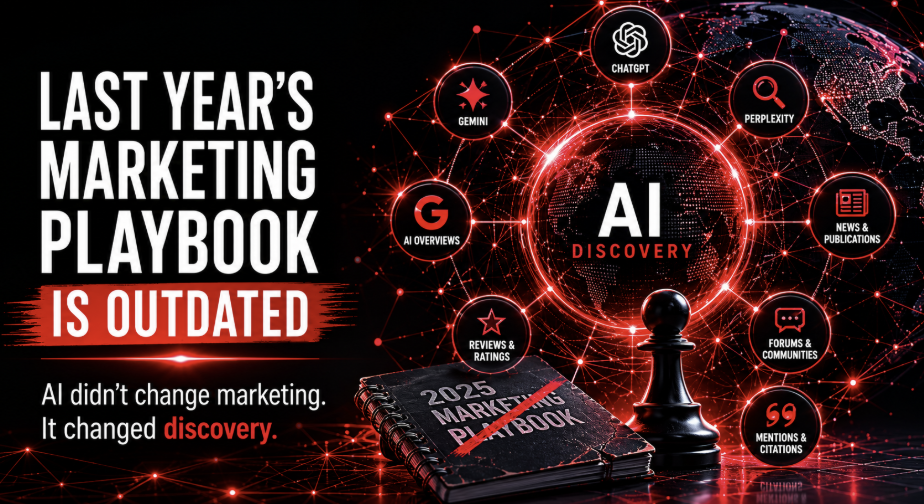
Last Year’s Marketing Playbook Is Outdated
In just a few weeks, thousands of brokers, PSPs, fintechs, affiliates, and solution providers will gather in Limassol for iFX Expo International 2026.
It’s one of the few times each year where the industry gets together in one place, making it the perfect opportunity to take a step back and ask a simple question:
What’s changed since last year?
In marketing, the answer is simple:
Almost nobody predicted how quickly AI would become part of the customer journey.
A year ago, most conversations around AI focused on operations.
How can it improve productivity?
How can it support customer service?
How can it streamline compliance?
How can it help sales teams work more efficiently?
Those conversations were important.
But there is one conversation that is emerging as more important:
What happens when customers start using AI?
AI Is No Longer a Tool – It’s a Touchpoint.
Over the past year, AI has quietly become one of the most important touchpoints in the discovery journey.
People aren’t just using ChatGPT, Gemini, Perplexity, Claude, and Copilot to help them work.
They’re using them to help them decide.
Which broker should I consider?
Which PSP is right for me?
What do customers say about {brand}?
At the same time, traditional search engines have begun moving in the same direction.
AI Overviews now appear across a growing percentage of search results.
AI-generated summaries are becoming increasingly common.
Google’s AI Mode is pushing search even further toward conversational discovery.
The common denominator is simple:
People are consuming more summarized information and fewer individual sources.
The Age of Skimming
Let’s be honest: Most users weren’t even sifting through ten search results before, and they’re certainly not doing it now.
People skim. They want shortcuts: They want summarized, digestible answers, and they want them fast.
That’s exactly why AI has been adopted so quickly: Instead of reviewing ten websites, users can receive a condensed overview in seconds.
Instead of comparing dozens of sources, they can consume a synthesized answer almost instantly.
Whether that’s good or bad is a separate debate.
The reality is that it’s happening.
And it’s changing how brands are discovered and evaluated online.
The New Battleground for Visibility
This shift creates a new challenge.
When users consume a summarized answer instead of reviewing multiple websites, that answer becomes incredibly influential.
It helps shape perception.
It influences trust.
It can determine which brands make the shortlist and which never get considered.
The question is no longer:
“Where do we rank?“
The question is:
“What information is being used to build the answer?“
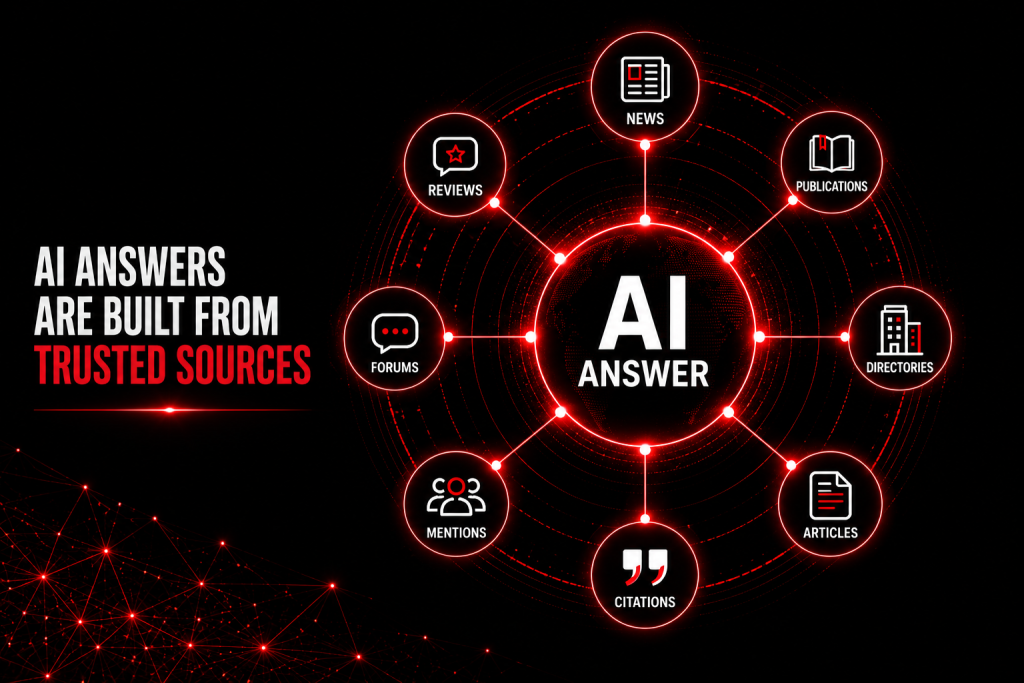
Because AI systems don’t invent information.
They synthesize it from news websites, industry publications, review platforms, forums, business directories, third-party articles, mentions and citations.
In other words, many of the same sources that have always influenced trust and reputation are now helping shape how AI systems understand brands.
So What Does This Mean for Brands?
The challenge isn’t that AI suddenly changed the rules of marketing overnight.
The challenge is that it changed the way people consume information.
For years, brands fought for visibility.
Today, they’re also fighting for attention within a much shorter decision-making process.
Because when a user reads an AI-generated summary, they’re often seeing a condensed version of everything the internet has to say about a company.
The reviews, the forum discussions, the media coverage, the third-party articles, the industry profiles, the good, the bad, and everything in between.
That means the quality, consistency, and visibility of your digital footprint matter more than ever.
Not because AI is replacing traditional marketing.
But because AI is increasingly becoming the first layer of research.
The first impression.
The first touchpoint.
And in many cases, the first answer.
The challenge for brands isn’t understanding SEO, Digital PR, or reputation management in isolation.
It’s understanding how all of those elements come together to influence what people see when they ask AI about your business.
Because if AI is helping shape perception before a prospect ever reaches your website, then visibility is no longer just about being found.
It’s about making sure the right information is being surfaced in the first place.
So Where Do Brands Go From Here?
The good news is that AI visibility isn’t a mystery.
It’s a system.
And like any system, it can be studied.
Over the past year, we’ve analyzed how AI platforms build answers, which sources appear repeatedly across those answers, and what patterns separate brands that consistently appear from brands that don’t.
The pattern has been remarkably consistent.
Brands that appear most frequently across AI-generated responses tend to have stronger visibility across authoritative third-party sources, including industry publications, review platforms, news websites, business profiles, forums, and other trusted sources of information.
None of these concepts are new.
What’s new is the role they now play in shaping AI-generated visibility.
A year ago, most businesses were asking how AI could improve their operations.
Today, they’re beginning to understand how AI is changing discoverability itself.
That’s where the new playbook begins.
Not by abandoning SEO.
Not by replacing Online Reputation Management.
Not by treating Digital PR as a standalone activity.
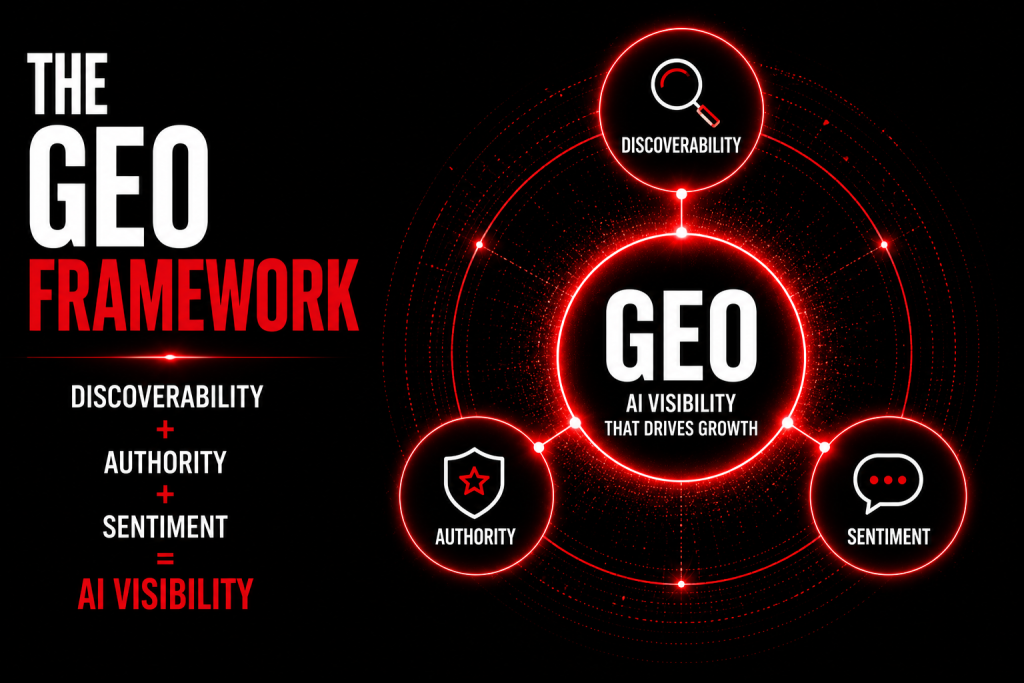
But by understanding how all of these disciplines work together to influence discoverability, trust, and visibility across both traditional search engines and AI-powered experiences.
That understanding became the foundation of our GEO framework.
A framework designed to help brands strengthen their presence across the sources that influence how AI systems discover, evaluate, and synthesize information.
Today, we help brands increase their visibility across many of the websites, publications, platforms, and authority sources that frequently appear in AI-generated answers.
Because if AI is becoming the first layer of research, then understanding where AI gets its information is no longer optional.
It’s a competitive advantage.
Meet Us at iFX Expo International

These are exactly the conversations we’ll be having at Booth #159 this year.
Over the last year, we’ve helped brands understand how AI platforms discover information, which sources influence AI-generated answers, and what practical steps organizations can take to strengthen their visibility across the web.
One of the things we’ve learned along the way is that brands need faster, more scalable ways to build authority across the web.
That’s one of the reasons we’re excited to officially introduce Buzz Dealer Online at this year’s expo.
Built around the same principles that power our GEO framework, Buzz Dealer Online gives brands direct access to publication opportunities on authoritative websites, making it easier than ever to secure mentions, earn citations, and strengthen their digital footprint across the sources that matter most.
Whether you’re a broker, PSP, fintech, affiliate, or solution provider, we’d love to show you what we’re seeing, what we’re testing, and what we’re learning about the future of discoverability in the age of AI.
If you’ll be attending iFX Expo International in Limassol, stop by Booth #159 and say hello.
A lot has changed since last year’s iFX, and we’re convinced the brands that adapt early will have an advantage.