
At this year’s Cyprus Fintech Summit, Artificial Intelligence was everywhere. From the expo floor to the breakout rooms, the buzz was constant: how to implement AI in RegTech, how to streamline KYC processes, or how to automate onboarding.
But while the industry was busy discussing how to use AI, we gathered to talk about something else entirely: how to survive being used by it.
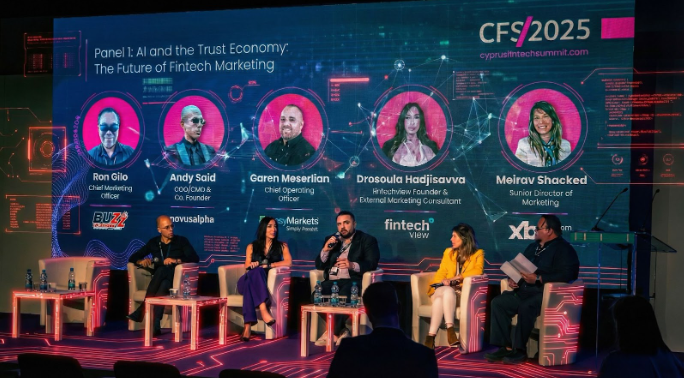
On the summit’s opening day (Dec 2) in Limassol, Buzz Dealer hosted “AI and the Trust Economy: The Future of Fintech Marketing”. Moderated by our CMO, Ron Gilo, the panel addressed what we like to call the “AI-generated elephant in the room”. The marketing game is no longer about human eyeballs scrolling through search results; it is about algorithm optimization, answer engines, and the rapidly approaching era where your brand’s reputation is determined by a Large Language Model.
Joining Ron to dissect this shift were four experts living it daily: Meirav Shacked (Senior Director of Marketing at XBO), Garen Meserlian (COO at easyMarkets), Drosoula Hadjisavva (Founder of Fintechview and an external marketing consultant), and Andy Said (COO & Co-founder of Novus Alpha).
The Shift: From Search to Answers
The premise of the discussion was a fundamental change in user behavior. We are leaving the age of “Search” and entering the age of the “Answer”. As Ron noted, users today are less likely to browse ten blue links; Instead, they are asking AI agents questions like “Which broker is safest?” or “Who offers the best spreads?”
In this new reality, being on the first page of Google isn’t enough – you need to be the entity the AI trusts enough to cite.
The “Glorified Autocorrect” Strategy
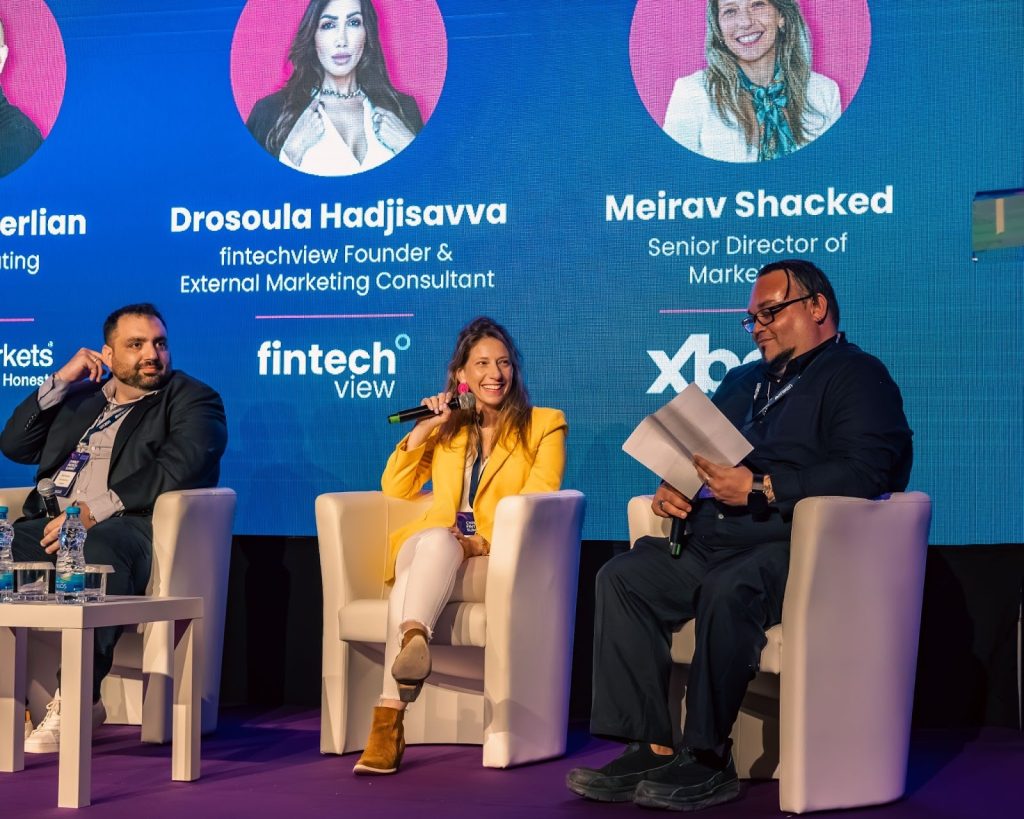
Garen Meserlian provided a critical reality check early in the conversation. He stripped away the sci-fi mystique of AI, reminding the room that these models are, effectively, “glorified autocorrects”. They don’t “think” – they predict the next plausible word based on the data they have been fed.
However, Garen argued that this limitation is exactly where the opportunity lies. Because these models rely on data probability, they can be influenced. “ChatGPT is still learning. Take advantage of it before the window closes,” he advised. The strategy? Reverse-engineer the results. Identify the high-authority sources that the AI is citing for your competitors, and ensure your brand is present and authoritative in those exact spaces.
Trust is an Operational Metric
But you cannot influence the algorithm with keywords alone. Andy Said shifted the focus to the operational backbone of trust. He argued that in the “Trust Economy,” marketing cannot outrun operations.
For NovusAlpha, the key is understanding that AI looks for validation signals – regulatory compliance, clear disclaimers, and transparent processes. “Trust starts with the foundation”, Andy explained. If your operational reality doesn’t match your marketing promise, the AI, which is trained to detect inconsistencies will simply filter you out.
The Mirror Effect
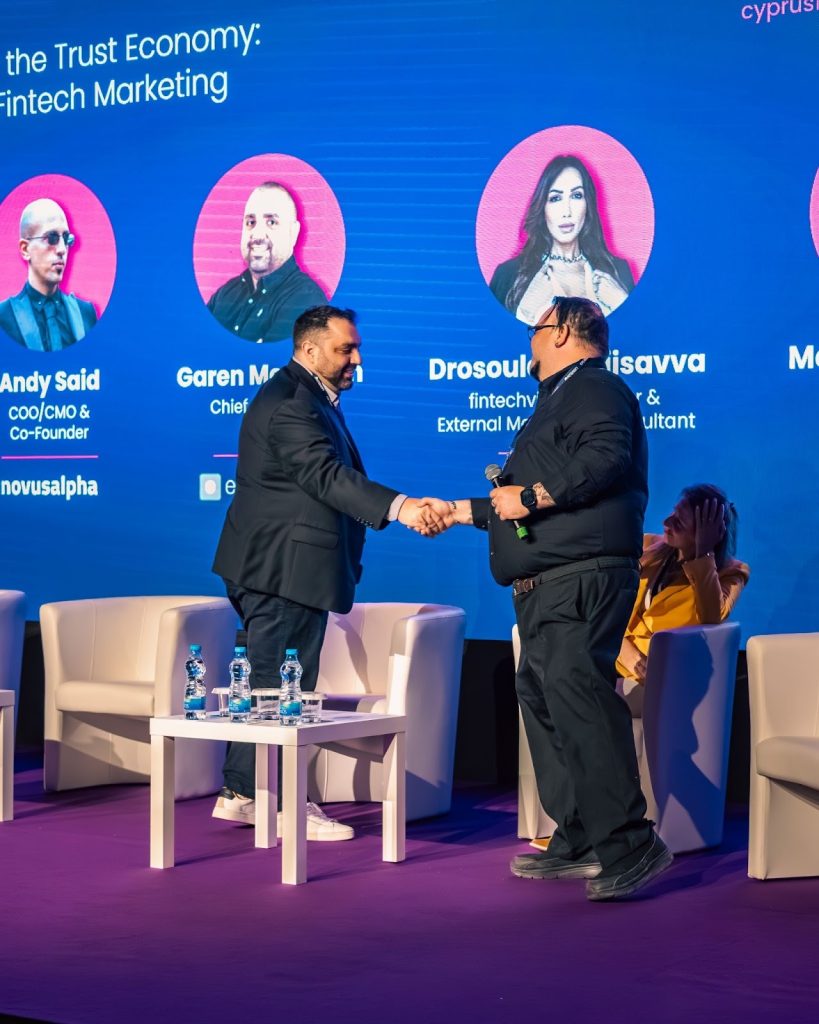
Expanding on the idea of transparency, Drosoula Hadjisavva described AI as a “ruthless mirror”. Unlike a traditional search engine where you might push a bad review to page two, AI synthesizes everything it finds into a single narrative.
If a brand has negative sentiment regarding withdrawals or support, the AI creates a composite “reputation” that is hard to shake. “You can’t just hide bad news anymore”, Drosoula warned. The only effective strategy is to flood the ecosystem with genuine, positive “mind-sharing” experiences that force the mirror to reflect a better image.
Owning the Narrative
Meirav Shacked emphasized that internal silos are dangerous because AI devours and compares data from every corner of the web, including news, social media, and corporate sites.
“You need to own your narrative”, Meirav urged. If your product team updates a feature but the marketing copy lags behind, the AI sees a contradiction. To win in this environment, marketing, product, and support must speak with one unified voice, ensuring the story the AI tells is the one you wrote.
The Verdict: It’s Time for GEO
The conclusion of the panel was unanimous: traditional SEO is evolving into GEO (Generative Engine Optimization). The target has moved from simply ranking for keywords in search results, to also becoming a trusted entity in the answers generated by AI engines.
As Ron Gilo summarized, “The era of search results dominance as we know it is coming to an end. We are now entering the age of the direct answer.”
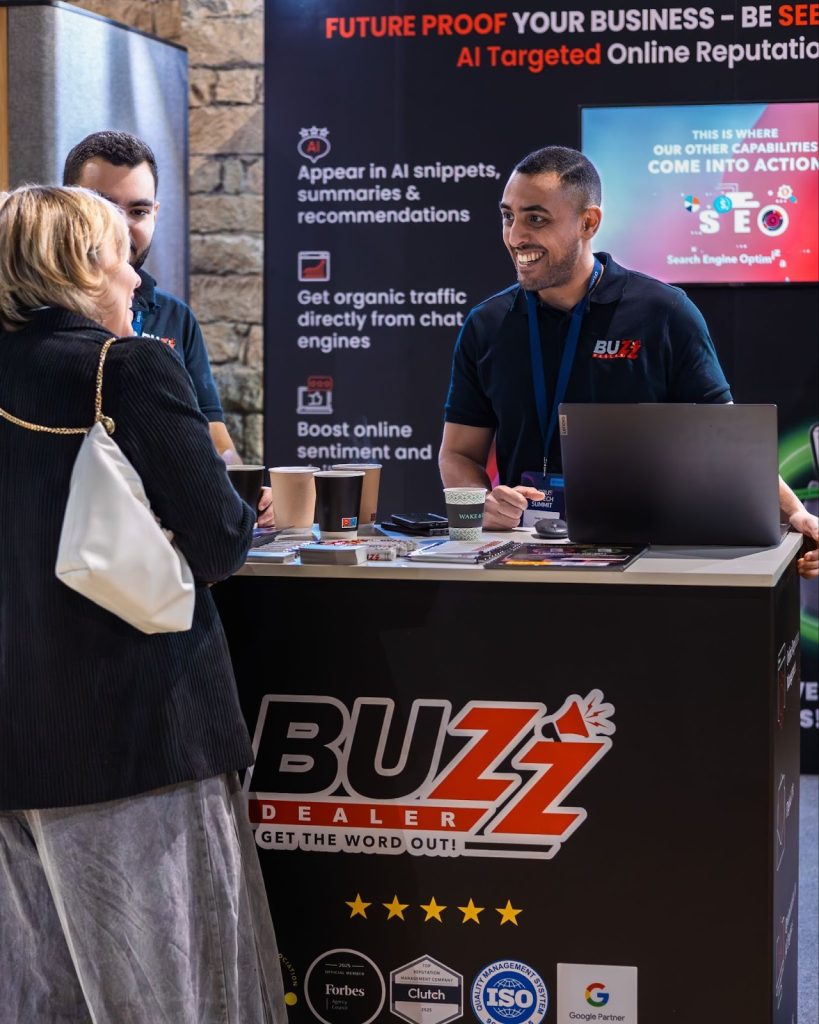
This philosophy is exactly why we have moved quickly to adapt. Just following the summit, Buzz Dealer officially unveiled our new GEO Service, a dedicated solution designed to future-proof brands for this exact shift and ensure that when the AI answers, it gives your brand the recommendation it deserves.
The transition from SEO to GEO is already happening. Do you know what ChatGPT or Gemini are saying about your brand right now? Ready to align your operations and marketing to meet this new standard? – You should be! Contact us today for a preliminary assessment and let’s make sure you own the answer!