
Why Digital PR Now Decides What AI Says About You
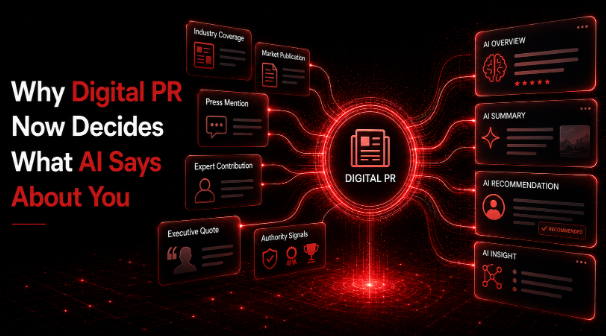
Every company wants toFor years, Digital PR was a visibility channel, and a good one. Get the brand mentioned in the right places, earn some coverage, pick up a few authority links, walk away with something worth sharing on LinkedIn. In competitive, trust-sensitive markets like financial services, fintech, PSPs, iGaming and B2B tech, that coverage made companies look more established and handed sales another proof point. None of that has stopped being true.
What’s changed is what the same coverage now does when nobody’s watching it.
The third-party content you build no longer just influences the people who happen to read it. It has become the raw material two other systems run on: the generative AI engines that increasingly describe and recommend your brand, and the reputation that decides how much damage a single bad source can do. Shape that material deliberately and you’re steering both. Ignore it and you’re leaving both to whatever the internet happens to say.
That’s why Digital PR has quietly become infrastructure. It’s the layer underneath the two disciplines we spend most of our time on at Buzz Dealer: Generative Engine Optimization (GEO) and Online Reputation Management (ORM).
The Campaign Mindset Is Where It Goes Wrong
Most companies still think about Digital PR in campaign terms. A launch to cover, a funding round to announce, a market entry to promote, a few links to shore up SEO. Nothing wrong with any of it, but campaign thinking quietly frames Digital PR as optional, something you switch on when there’s news and switch off when budgets get tight.
That logic held up when the buying journey was linear: hear about a company, search it, visit the site, skim reviews, maybe compare a competitor. Digital PR was one touchpoint among many. The journey isn’t linear anymore. People research across Google, AI assistants, review sites, industry publications, forums, comparison pages and third-party databases, jumping between them, skimming summaries and forming judgments fast. In that world your external footprint is working continuously, campaign or no campaign. Treating it as an on/off switch usually means it’s working against you.
The Footprint Is the Product
Buyers, search engines, AI assistants, journalists and investors all look past your website for confirmation. That’s the whole reason the trust gap exists, and it’s worth understanding on its own terms (we cover the buyer psychology here). What matters for Digital PR is the consequence: if the only substantial information about your brand lives on your own domain, there’s nothing for any of them to corroborate. Strong brands are backed by signals they don’t own: mentions in relevant publications, executives quoted and published, market activity documented where customers already look. Building that external proof layer is exactly what Digital PR is for, and everything below is about doing it on purpose rather than by accident.
Where Generative Engine Optimization Comes In
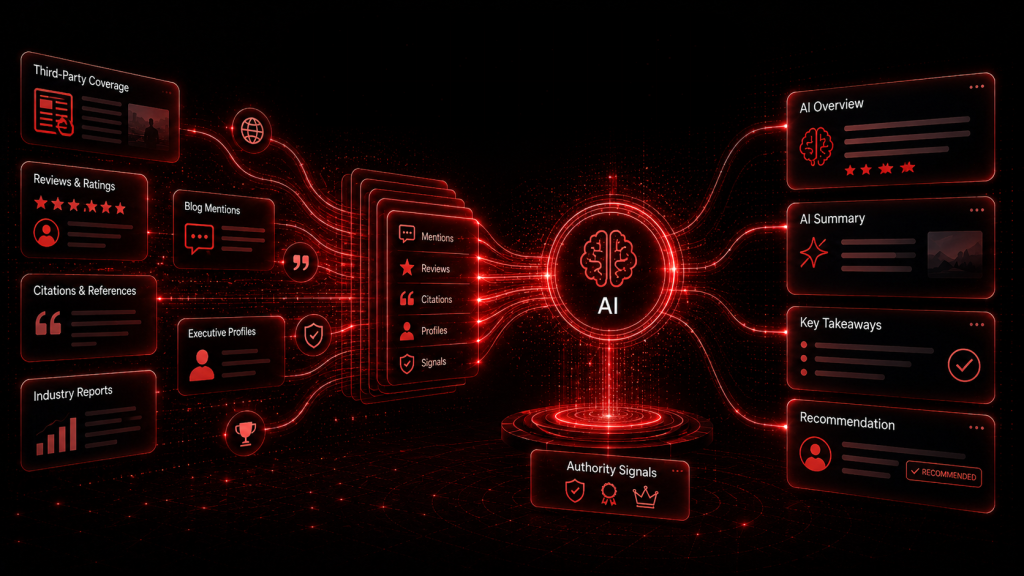
Ask an AI assistant about a company and it doesn’t simply read that company’s homepage and paraphrase it. It assembles an answer from the wider web: third-party mentions, how consistently the brand is described across sources, the topics it’s associated with, reviews, citations, structured profiles. Whatever that broader environment says is roughly what the engine repeats.
That’s the whole premise of Generative Engine Optimization. Instead of optimising a page to rank, you’re shaping the source material so generative engines understand and describe the brand correctly, and ideally recommend it. Digital PR is one of the strongest levers you have here. A well-placed article clarifies what the company does. Consistent coverage reinforces the markets it operates in. Executive commentary ties it to specific areas of expertise.
None of this works like a magic switch. One article won’t rewrite how ChatGPT talks about a brand, and anyone promising that is selling something. But steady, credible third-party coverage keeps improving the information these systems have to work with, and in an AI-mediated market, being described accurately sits upstream of everything else. You can’t be recommended if you’re misunderstood.
And Where Reputation Management Comes In
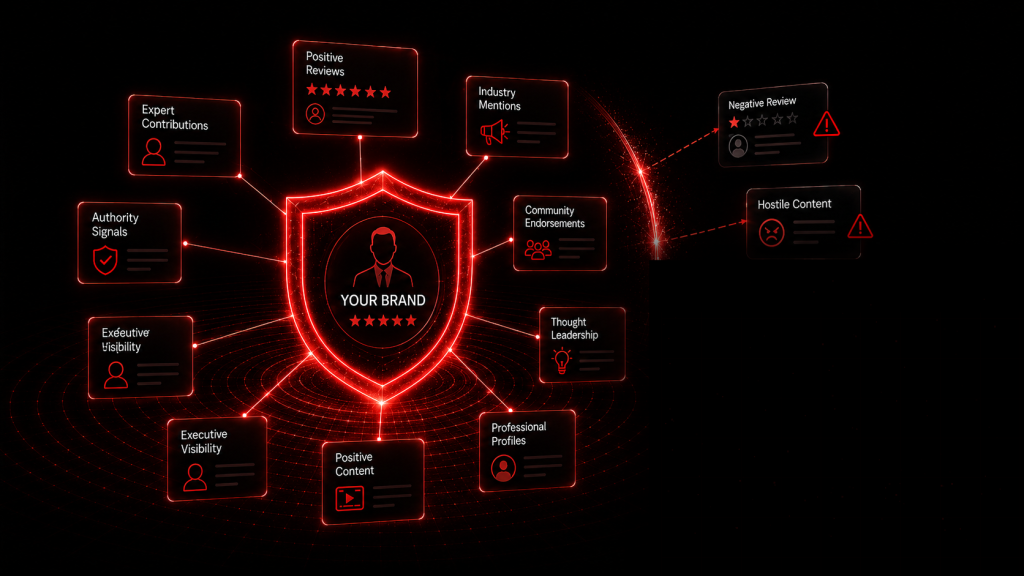
The same footprint decides how exposed you are. When a brand’s third-party presence is thin, every negative or outdated source carries outsized weight: one hostile article, one bad review page, one forum thread can define the entire search result. A review platform changes its policy, a competitor gets loud in a market where you’re barely present, an AI tool summarises you from a narrow and unflattering slice of sources, and there’s nothing around it to provide balance.
A deeper footprint absorbs those shocks. That’s the heart of Reputation Management: not scrubbing the internet or manufacturing praise, but building enough credible, relevant, positive material that no single source gets to define you. GEO builds the authority, ORM protects the perception, and Digital PR is the supply line feeding both. It’s why we treat them as one system rather than three separate services.
Being Everywhere Isn’t the Goal
The answer isn’t to chase every publication, mention and backlink you can find. That produces noise, and noise doesn’t build anything. Good Digital PR starts from commercial priorities: which markets actually matter, which services need more authority, which search results are weak, which AI answers about you are incomplete or wrong, which competitors own conversations you’re absent from, which executives should be visible, which topics you want to be known for.
From there it gets specific. A company entering a new region needs coverage in the right local and industry outlets. A brand fighting a trust problem needs stronger proof around credibility, leadership and market experience. A business trying to improve how AI describes it needs more consistent external descriptions and cleaner topical association across trusted sources. That’s the difference between buying coverage and building infrastructure. The first is a purchase. The second keeps working long after you’ve stopped paying for it.
The Takeaway
Digital PR hasn’t stopped being PR. It still earns visibility, credibility and coverage. But it now feeds two systems that determine how a brand is discovered and how well it holds up under scrutiny: the AI engines describing you, and the reputation protecting you. That’s what makes it infrastructure rather than a nice-to-have. And like any infrastructure, the time to build it is before you urgently need it, not in the middle of the quarter when something goes wrong. control its own story. It’s a fair instinct, and an expensive one. Look at where the money goes – websites,