
What Brands Should Be Measuring Now
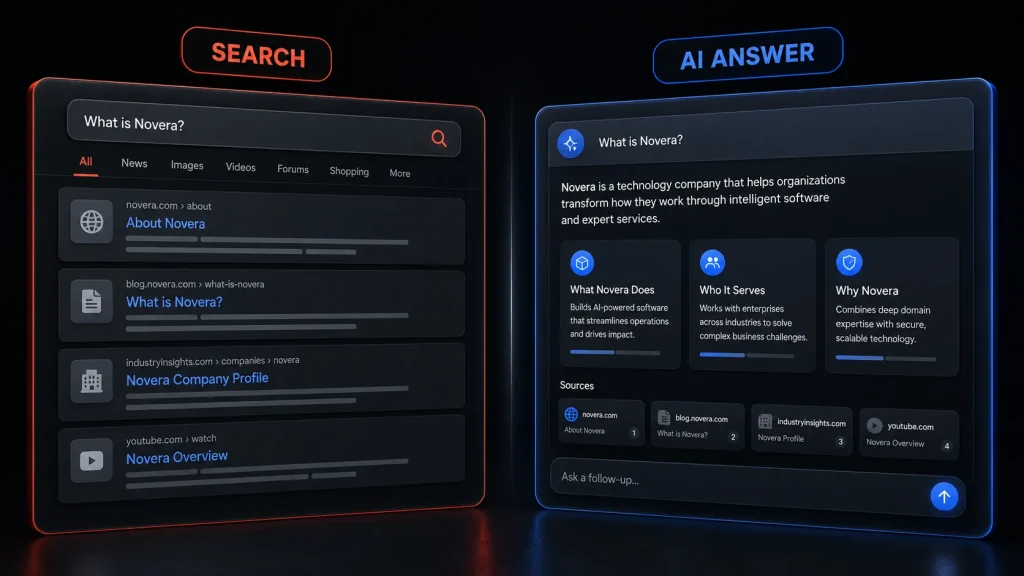
Organic visibility has split in two. Customers find and judge brands through search results and through AI engines, and most brands are still measuring only the first half. Generative Engine Optimization is the name for the work that fixes the second half, but before the work comes the measurement. This article sets out what to measure: whether people can find you, whether the sources that shape both surfaces treat you as trustworthy, and how you are actually described when someone asks. It also explains why one of those three moves the other two, which is the single most useful thing we have learned since we started measuring all of it properly.
The half nobody is measuring
Most marketing teams have a rankings dashboard. Almost none can answer a simpler question: when a customer asks ChatGPT or Gemini about our category, what does it say about us?
That question used to be a curiosity. It is now a meaningful share of how buyers form a first impression, and it is the reason Generative Engine Optimization exists as a practice at all. Unlike a search result, you cannot check it by glancing at a report. The answer varies by engine, by phrasing, and by language, and it is assembled from sources you may never have looked at. We covered the early signs of this shift when AI search and chatbots first started reshaping reputation, and it has moved faster since.
The instinct is to treat this as a new discipline sitting beside SEO. It isn’t. The two surfaces read the same material. Google’s AI Overview cites search results. Generative engines draw on the same indexed web that search engines rank, plus the reference and review sources they use to check facts. Customer behaviour has fused them too: people ask an engine for names, then search those names to verify them, or search first and ask an engine to summarize what they found.
Which means measuring one and not the other does not give you half a picture. It gives you a distorted one.
Your reputation is now resolved before the click. If you only measure what happens after the click, you are measuring the wrong half.
So what should you be measuring?
Three things, across both surfaces and in every market you sell in: whether you can be found, whether you are trusted, and how you are described.
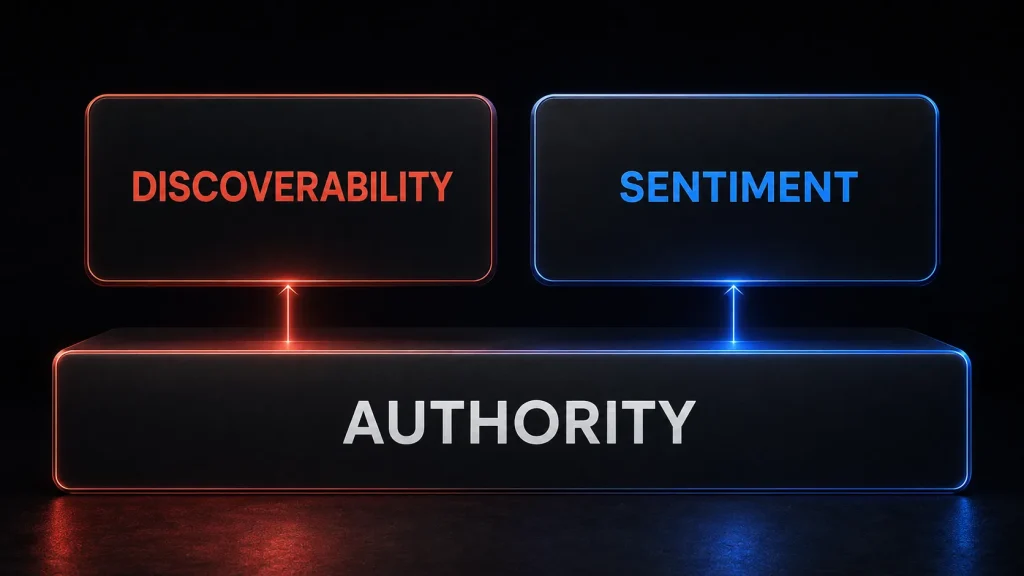
Discoverability. Will a customer find you at all, whether they type a query or ask a question? This covers ranking for the terms that matter, but also whether you appear at all when an engine is asked to name options in your category, and whether your site is technically readable by the crawlers that feed both.
Authority. Do the systems that decide what to show, and the sources they check, treat you as credible? Domain strength and backlinks, but also whether independent coverage exists, whether reference sources carry accurate entries about you, and whether review platforms show a business that looks real and established.
Sentiment. How are you actually talked about? Not your review average, but the tone of what surfaces when someone searches your name, searches your name plus “reviews,” searches your name plus a complaint, or asks an engine directly whether you are any good.
The three are not equal, and that turns out to matter more than anything else on this list.
Why authority is the leverage point in Generative Engine Optimization
Authority sits underneath the other two. It is measurable on its own, and fixable on its own, but its real value is that improvements to it propagate.
Fix a genuine trust deficit and both other measures move. The same signals that make an engine confident enough to cite you make it more likely to surface you and more likely to describe you accurately, because they are literally the same sources. Improvements to the other two mostly stay where you put them. Review management moves sentiment and little else. Presence in the communities where your category is discussed moves discoverability.
Work on the shared material pays twice. Everything else pays once.
This is why a plan built from a proper diagnosis looks different from the standard checklist. A brand described accurately by four engines and wrongly by two does not have a content problem; it has a source problem, and the fix is the specific document those two engines are reading. A brand with excellent rankings and nothing in the reference layer has no SEO deficit at all and a severe Generative Engine Optimization one, because engines have nothing citable to point at. A brand with a healthy review average whose negative tail owns the review search results has a sentiment problem that no amount of review volume will solve.
None of which makes authority the answer to everything. Sometimes the best available return is a week of work on your own content. But when the root cause is trust, publishing more will not fix it.
What “Atom” shows us when we measure both
We started measuring all of this systematically this year, after publishing the GEO-First Framework in the World Journal of Advanced Research and Reviews. A framework nobody can measure is only a position, so we built the tooling to run it. Atom, our audit system, covers six AI engines, the full range of search surfaces, and the shared sources both draw on, scored per market and per language in a single pass. It went live in June, had its first outing running roughly forty live brand audits at iFX Expo International in Limassol, and has produced more than two hundred reports since.
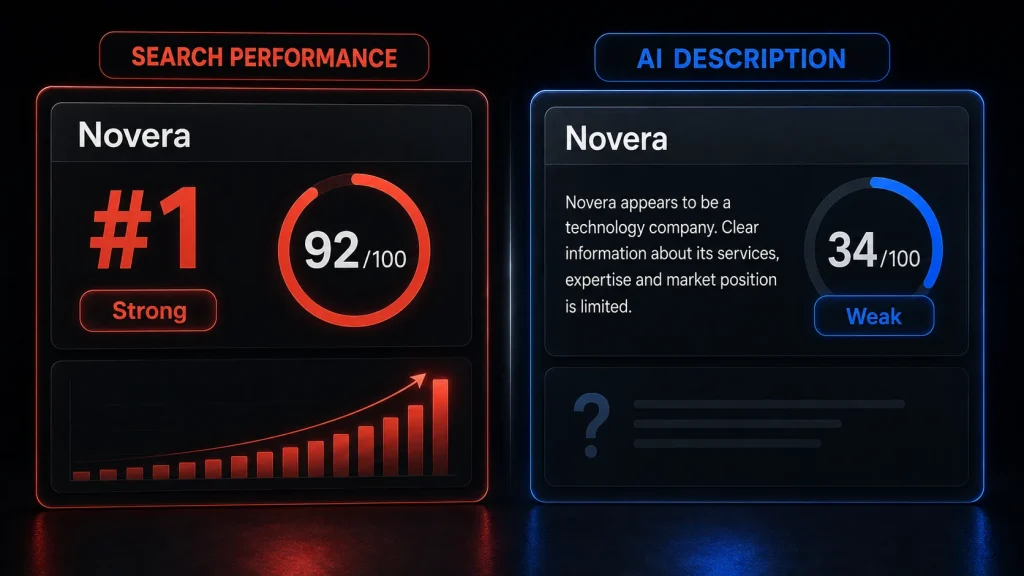
The consistent finding is not about any individual engine. It is the size of the gap between the two surfaces for the same brand.
Companies that rank perfectly well are described badly, because ranking rewards pages while engines reward citable claims. Other companies are described generously by engines that cannot point to a single authoritative source behind the praise, which is a flattering position and a fragile one. In most cases the gap between the two, rather than either score alone, is the actual story, and it is invisible unless you look at both in one pass. That is what AI Search Engine Optimization now requires, and what a rankings dashboard will never show you.
Where to start
If you want a quick sense of your own position, ask three engines what they say about your company, in each language you sell in, and compare it against what ranks for your brand name. It takes an afternoon and it is usually uncomfortable.
For the full picture, including the reference and review layers that drive both surfaces, that is what an Atom report covers, and it is where every engagement with us now begins. We assess the same three pillars for individuals as well, through our personal reputation service, which matters more than most executives expect.
Click Here to receive your comprehensive report